Medical Practice Accounting Made Simple
A step-by-step guide to medical practice accounting: daily cash, cheques, expenses, payroll, doctor shares and profit and loss, without spreadsheets.

Medical practice accounting starts with one simple rule: record every inflow and outflow of the practice's money — from reception payments to rent, payroll and supplies — so that at any moment you know your real income. In clinics, splitting income between doctors and partners is added on top.
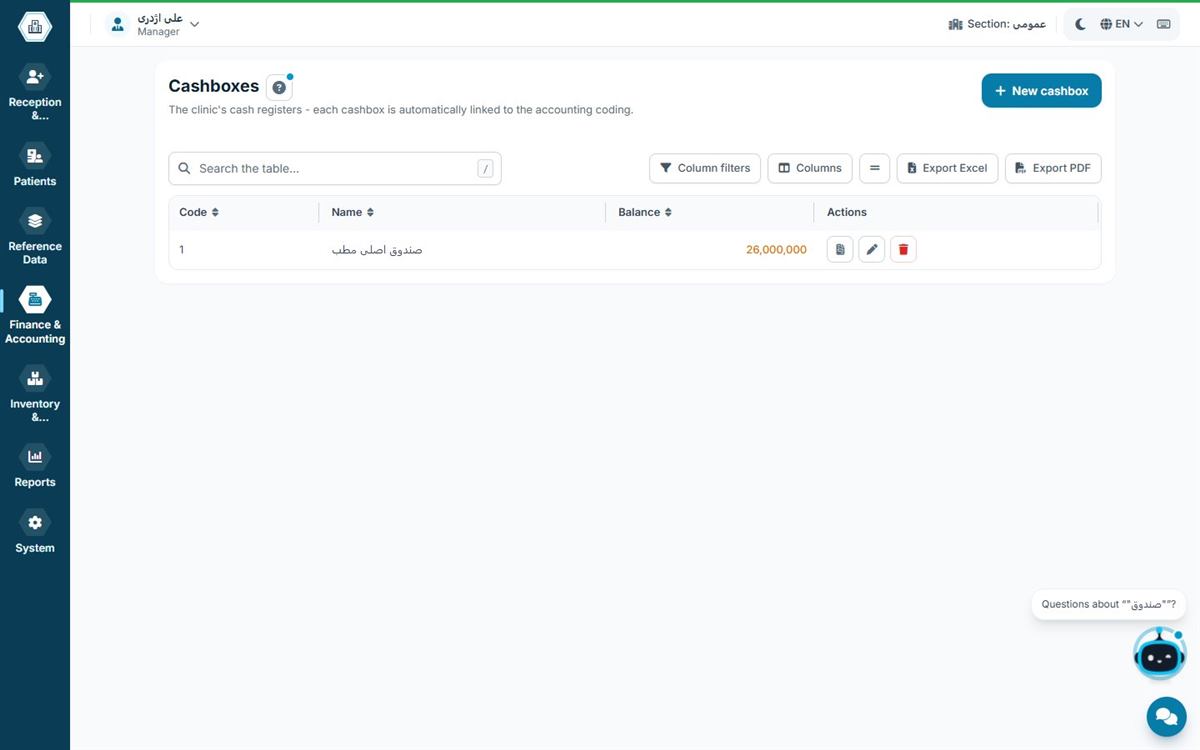
The daily cash box: step one
Every day, total reception payments must be reconciled with cash, card terminal and bank transfers. When reception and the cash box live in the same software, each visit is posted to the cash box automatically and the receptionist only checks discrepancies at the end of the shift. Closing the cash box per shift also makes each receptionist's responsibility clear.
Expenses, cheques and payroll
- Expenses: record rent, utilities, supplies and repairs by category so the monthly report shows where the money goes.
- Cheques: record the due dates of cheques received and issued so you get reminders.
- Staff payroll: record base pay, overtime and deductions monthly and print payslips.
Doctor and partner shares
In a clinic, the income from each service is usually split between the centre, the doctor and sometimes an assistant. Calculating these shares by hand at the end of the month is the most error-prone task in clinic accounting. Your software should let you define each doctor's share as a percentage or fixed amount per service and calculate it automatically on every visit. We cover multi-doctor clinics in this article.
Reports every practice needs
- Daily cash and reception report
- Income per doctor and per service
- Expenses by category
- Monthly profit and loss
- Amounts owed by patients and insurers
A simple doctor-share example
Say you've defined a service where the doctor gets 40% and the centre 60%. On every visit for that service, the software immediately posts 40% to the doctor's account and 60% to the centre. If an assistant also has a share, their percentage is defined separately. At the end of the month, each doctor's total is ready and only needs to be paid out. The same rule applies to clinic partners.
Common practice accounting mistakes
- Not recording small expenses: small daily purchases add up to a large monthly total.
- Mixing personal and practice accounts: it makes the profit and loss report meaningless.
- Not closing the cash box every shift: discrepancies surface days later with no clear source.
- Calculating doctor shares by hand: the most error-prone task in clinic accounting.
- Not tracking cheques: a bounced cheque or a forgotten due date disrupts the practice's cash flow.
Dental practice accounting
In dentistry, treatment is usually paid over several sessions and instalments. Accounting must show each patient's balance, overdue instalments and the dentist's share of each session separately.
Month-end checklist
- Close every shift cash box and review discrepancies
- Record all expenses and bills for the month
- Calculate and approve the shares of doctors, assistants and partners
- Record staff payroll and print payslips
- Review cheques due next month
- Run the profit and loss report and compare it with last month
Tracking patient and insurer balances
Part of a practice's income is not paid on the day: patients who pay part of the fee later, instalments for long treatments and insurers who settle late. If these amounts are not recorded separately, the practice sees its income as higher than the cash it has actually received. Practice accounting should show a balance for each patient and the receivable for each insurer, and you should review overdue balances every month.
How to read your reports
- Income per doctor: which doctor contributes most to income, and what is the trend?
- Income per service: which services are most profitable and which mostly take time?
- Expenses by category: which expense has grown the most?
- Monthly profit and loss: is profit growing in step with patient volume?
A good report doesn't just show numbers; it answers a management question. Ask these four questions of your reports every month.
Accounting in Hamyarteb
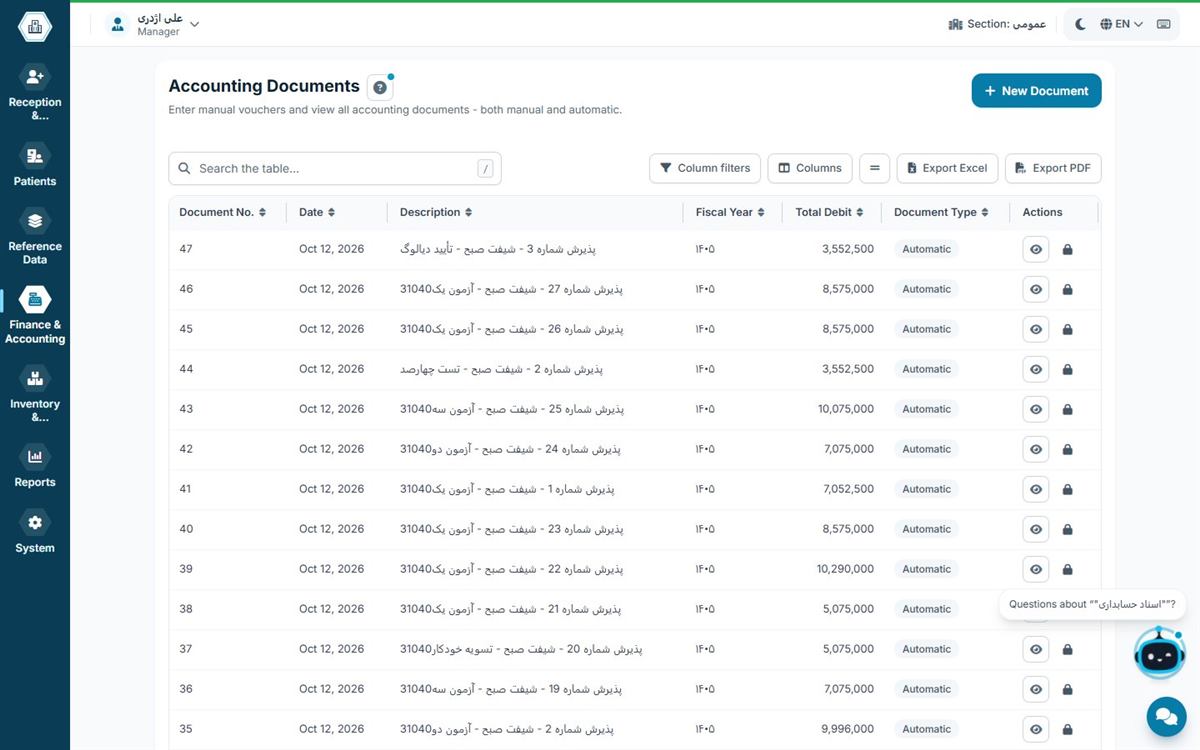
Hamyarteb links reception directly to the cash box and accounting vouchers. Cash boxes, cheques, expenses, staff payroll, doctor and assistant shares and ready-made reports are all built in, with a chart of accounts and vouchers for your accountant. Inventory and purchasing are connected to the same accounts.
See also: medical practice accounting software.
Frequently asked questions
Does a small practice need accounting?
Yes. Even simple recording of the daily cash and expenses gives you a clear picture of real income.
Are doctor shares calculated automatically?
In software that lets you define shares per service, yes; in Hamyarteb they are calculated on every visit.
Does it replace an accountant?
No. It automates data entry so the accountant can focus on review and decisions.
How often should I run a profit and loss report?
At least monthly; a month-on-month comparison shows which costs or income streams have changed.
Should I separate personal and practice accounts?
Yes. Mixing them makes the practice's financial reports unreliable.